Practical guides for better decisions, stronger teams, and useful AI.
Explore six field notes connecting baseball, AI technology, and GTM leadership. Each includes a concrete exercise to bring into your next meeting, workflow review, or practice.
Six Practical GuidesClear ideas with a specific question to work through.Team ExercisesApply each guide to a real situation in your organization.Baseball To BusinessPreparation, adoption, coaching, and decision quality.
Series Strategy
Choose the challenge your team is facing.
Start with AI Without the Hype for a first workflow pilot, The Demo Room for buyer conversations, or The Coach's Notebook for everyday team standards. The full guides below turn each theme into a practical discussion.
Read an idea. Try an exercise. Review what changed.
Use one guide at a time. Bring a specific example, invite the people who own the work, and finish with an action and a review date. A useful conversation should leave the team clearer about what happens next.
A better decision starts before the pressure arrives
Use a pre-decision routine to separate what your team controls from what it can only react to.
A pitcher cannot control the umpire, the hitter, or what happened in the previous inning. A leadership team cannot control every competitor, budget change, or buying committee either. The useful question is the same: what can we prepare before the next decision becomes urgent?
Start by naming the decision in one sentence. Then separate evidence from assumptions. A customer asking for a demo is evidence of interest; assuming the customer has funding is a different claim. Give each important assumption an owner and a way to check it. This makes the conversation more concrete without pretending that uncertainty can be eliminated.
Agree on a decision deadline and the conditions that would cause you to revisit it. Without those boundaries, preparation can become delay. With them, a team can act on the information available and learn deliberately from what follows. The goal is a repeatable process, not perfect prediction.
Try this with your team
Before your next consequential meeting, write down the decision, three known facts, two assumptions, one owner, and the deadline. End by agreeing on what new evidence would change the decision.
Start with a specific task, a human reviewer, and a baseline you can actually measure.
Buying access to an AI tool is a purchasing decision. Getting a team to use it responsibly in real work is an adoption problem. A useful starting point is a recurring task with a clear output: preparing a first draft of an account brief, summarizing approved reference material, or organizing notes for human review.
Choose work where someone can judge quality and catch errors before the output affects a customer. Define what information may be used, who reviews the result, and when the team should fall back to its existing process. For sensitive, regulated, or customer-facing work, involve the appropriate security and domain owners before running the pilot.
Measure the complete workflow. A faster first draft is not necessarily a faster finished task if review and correction take longer. Record time to an acceptable output, rework, recurring errors, and whether people keep using the workflow. Compare with a small baseline from the existing process. Expand only when the evidence supports doing so.
Try this with your team
Select one recurring task. Name its owner, approved inputs, reviewer, acceptance criteria, and baseline. Run a small pilot and schedule a review before adding another use case.
Connect technical capability to the buyer's workflow, evidence needs, and next decision.
A polished demo can still leave a buyer unsure what to do next. Feature comprehension and buying confidence are different outcomes. Before opening the product, establish which workflow is painful, who feels the impact, and what the buyer would need to see to consider a change.
Build the demonstration around one before-and-after scenario. Show the current handoff or constraint, the part of the workflow your product changes, and the part a human still owns. State limitations clearly. Credibility improves when the team can distinguish what the product demonstrates today from what a future rollout would need to prove.
Close with a decision, not a vague request for feedback. A next step could be validating a sample workflow with an operational owner or agreeing on evaluation criteria. Write down the owner, evidence required, and date. If the buyer cannot identify a reason to change or a person who owns the problem, more features may not resolve the hesitation.
Try this with your team
Rewrite your demo opening: 'Today we will show how [role] handles [workflow], what changes, and what we still need to validate.' Finish with a jointly agreed evaluation step.
Help athletes and business teams recover their attention after a setback.
Pressure narrows attention. After a mistake, it is easy to replay the last result while the next opportunity is already arriving. The aim of a reset routine is to direct attention toward the next controllable action. It does not erase disappointment or guarantee the next result.
Use a short sequence that can be practiced in ordinary conditions: pause, name what happened without adding a judgment about yourself, identify the next useful action, and commit. On a team, agree on language that keeps feedback specific. 'The handoff was late' gives someone something to change. 'You always fall apart' does not.
Save deeper analysis for a deliberate review. Immediate correction and long-term learning serve different purposes. After the event, examine preparation, execution, and recovery separately. A good result can hide weak preparation, just as an unfavorable result can follow a sound decision. Review the process as well as the scoreboard.
Try this with your team
Choose a short reset cue with your team. Rehearse it during practice or a low-stakes meeting, then debrief whether it helped people return to the task.
Replace broad expectations with behaviors people can practice, see, and improve.
'Be accountable' is an aspiration until people know what it looks like on an ordinary day. A useful standard describes an observable behavior: confirm the owner before a handoff, flag a blocker early, or finish a meeting with a decision and a due date. Concrete standards make coaching more fair and more actionable.
Choose a small number of behaviors tied to a real problem. If customer handoffs keep breaking, focus on the information and ownership needed at that moment. Do not bury the team in a long values checklist. Explain why the standard matters and model it as a leader, especially when following it becomes inconvenient.
Review examples regularly. Ask what happened, what the person understood the expectation to be, and what support would improve the next attempt. Distinguish an unclear process from a skill gap or a missed commitment. Those problems need different responses. Consistency comes from repetition, useful feedback, and leaders honoring the same expectations.
Try this with your team
Pick one recurring team frustration. Translate it into a behavior that two people could independently observe, then review examples together after one week.
Inspect buyer evidence, decision ownership, and the next action behind the forecast.
Pipeline totals tell a team how much opportunity it has recorded. They do not explain whether buyers can make a decision. A useful review looks underneath the number: whose problem is being solved, how the buyer describes its impact, and what evidence supports the team's view of the opportunity.
Ask three questions about a deal. What has the buyer confirmed? What still depends on an assumption? What decision must happen next, and who owns it? An enthusiastic contact is valuable, but enthusiasm alone does not establish approval authority, budget, or a workable evaluation process.
Use the answers to choose a specific action. A technical uncertainty may require validation; an ownership gap may require a conversation with the operational leader; a low-priority problem may justify stepping back. The purpose of the review is to improve resource allocation and buyer understanding, not to force every opportunity into a more optimistic stage.
Try this with your team
For three active opportunities, record one buyer-confirmed fact, one unresolved assumption, and one next decision with an owner. Use the gaps to set the team's priorities.
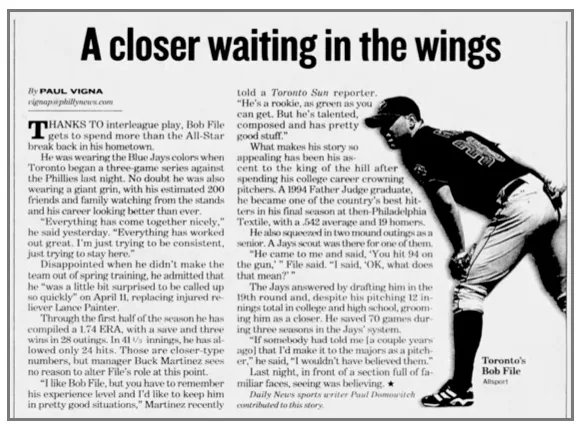
The writing draws from measurable performance, professional baseball history, and the work of explaining difficult ideas to real audiences.
The RecordPerformance data, patterns, and the standards behind them.The StoryA career chapter with lessons that travel beyond baseball.The RoomIdeas sharpen when they have to land with an audience.
Next Step
Bring the right version of the story into the room.